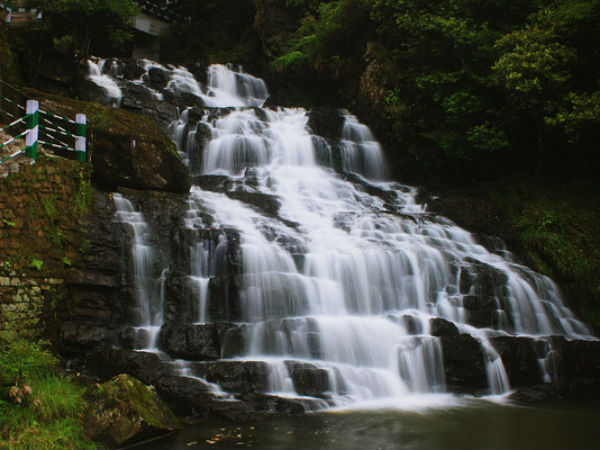
Shillong is a hill station in the northeastern part of India and the capital of Meghalaya, which means “The Abode of Clouds” and is one of the smallest states in India. It is the headquarters of the East Khasi Hills district and is situated at an average altitude of 4,908 feet (1,496 m) above sea level, with the highest point being Shillong Peak at 6,449 feet (1,966 m). Shillong is the 330th most populous city in India with a population of 143,229 according to the 2011 census. It is said that the rolling hills around the town reminded the European settlers of Scotland. Hence, they would also refer to it as the “Scotland of the East”.
Shillong has steadily grown in size since it was made the civil station of the Khasi and Jaintia Hills in 1864 by the British. In 1874, on the formation of Assam as the Chief Commissioner’s Province, it was chosen as the headquarters of the new administration because of its convenient location between the Brahmaputra and Surma valleys and more so because the climate of Shillong was much cooler than tropical India. Shillong remained the capital of undivided Assam until the creation of the new state of Meghalaya on 21 January 1972, when Shillong became the capital of Meghalaya, and Assam moved its capital to Dispur in Guwahati.
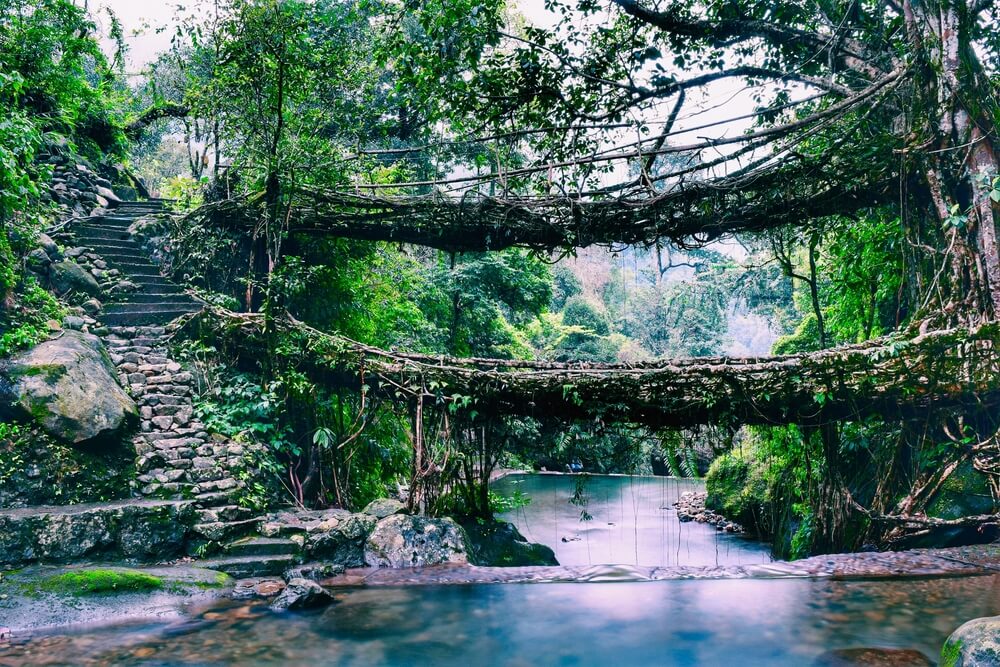
Cherrapunji with the native name Sohra being more commonly used, and can also be spelled Cherrapunjee or Cherrapunji) is a subdivisional town in the East Khasi Hills district in the Indian state of Meghalaya. It is the traditional capital of aNongkhlaw hima (Khasi tribal chieftainship constituting a petty state), both known as Sohra or Churra.
Cherrapunji has often been credited as being the wettest place on Earth, but for now nearby Mawsynram currently holds that distinction. Cherrapunji still holds the all-time record for the most rainfall in a calendar month and in a year, however: it received 9,300 millimetres (370 in; 30.5 ft) in July 1861 and 26,461 millimetres (1,041.8 in; 86.814 ft) between 1 August 1860 and 31 July 1861.
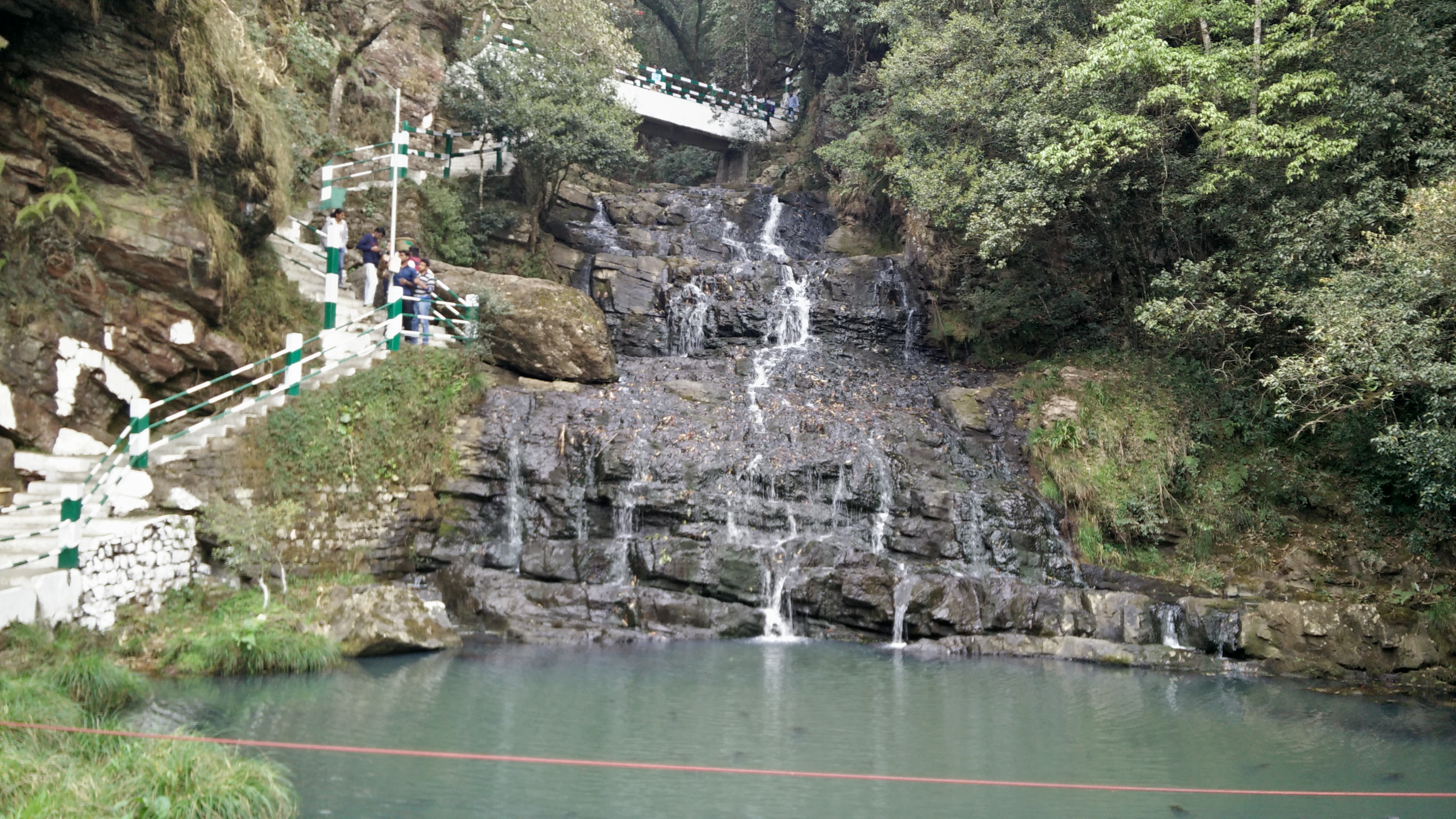
Elephant Waterfalls is a waterfall in the Central Highlands of Vietnam. It is located about 25 km from Da Lat on the Cam Ly River. The falls are described as one of the most beautiful of the Central Highlands.
A path with steps carved out into the slippery rocks leads to the foot of the falls. Bats roam around the area, where they inhabit a cave under the waterfalls.
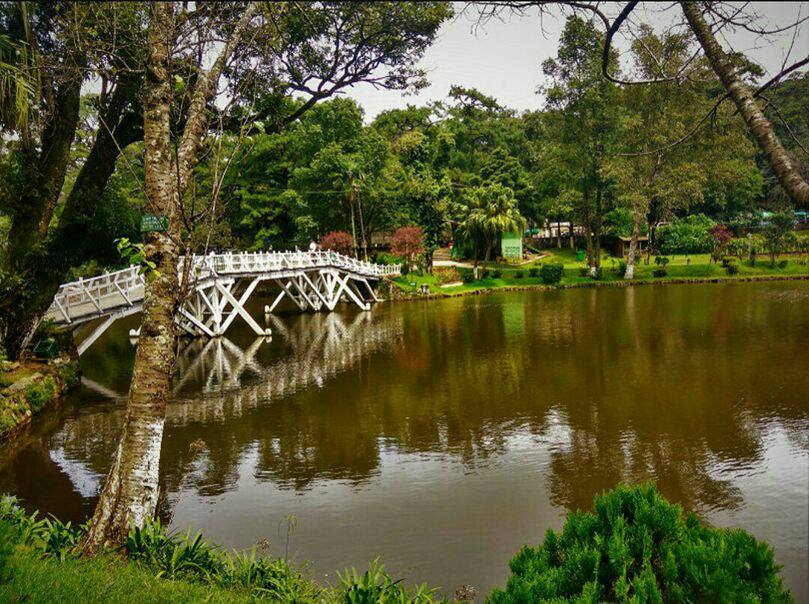
One of the most popular attractions of Shillong, Ward’s lake is a must-visit place when in this pristine north-eastern city. Also known as Pollock’s Lake, this artificial water body is encircled by an extensive lush garden and lies in the middle of the city. Take a walk around this horse-shoe shaped lake on the cobble-stone path or simply admire the colorful floral beds in the garden. It is equally popular amidst locals, family vacationers and honeymooning couples, as a picnic spot.
The lake is named after the then Chief Commissioner of Assam, Sir William Ward, who started the plan for the establishment of this lake. It was later on constructed in the year 1894 by Colonel Hopkins. One of the associated stories is that a Khasi prisoner develop the area around the Lake to change the monotony is his daily routine.
Close to the Ward’s Lake is a botanical garden that boasts of several orchids along with a number of other floral species. In the middle of the lake is a wooden bride from where you can enjoy a lovely views of the Lake and you can partake in feeding the fishes too. Visitors can also enjoy boating here on the placid waters of the Lake.
There is a cafeteria too in the lake’s complex where you can gorge on a wide variety of refreshments and beverages. Lying below Raj Bhavan (the Governor’s Residence), the lake can be easily accessed via local transport.

 Vartika Acharya