Jaipur is the capital and the largest city of the Indian state of Rajasthan. It was founded on 18 November 1727 by Jai Singh II,the ruler of Amer, and after whom the city is named. As of 2011, the city had a population of 3.1 million, making it the tenth most populous city in the country. Jaipur is also known as the Pink City, due to the dominant color scheme of its buildings. It is located 268 km (167 miles) from the national capital New Delhi. Jaipur is a popular tourist destination in India and forms a part of the west Golden Triangle tourist circuit along with Delhi and Agra (240 km, 149 mi). It also serves as a gateway to other tourist destinations in Rajasthan such as Jodhpur (348 km, 216 mi), Jaisalmer (571 km, 355 mi) Udaipur (421 km, 262 mi), Kota (252 km, 156 mi) and Mount Abu (520 km, 323 mi). Jaipur is located 616 km from Shimla.
HAWA
MAHAL
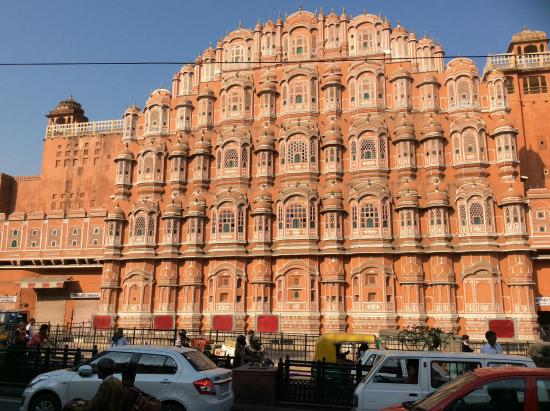
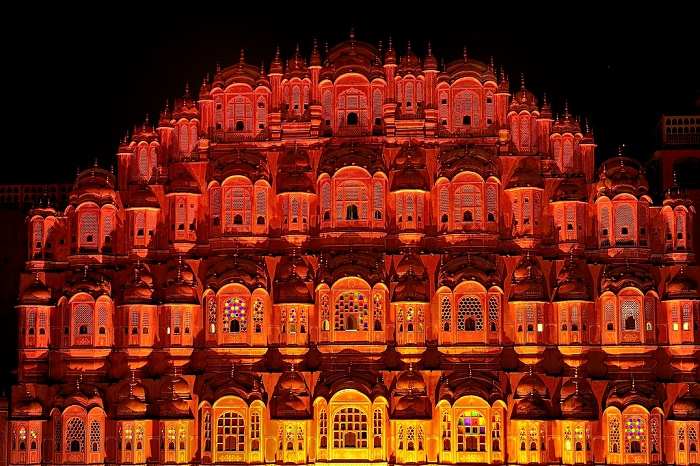
HawaMahal is a palace in Jaipur, India. It is constructed of red and pink sandstone. The palace sits on the edge of the City Palace, Jaipur, and extends to the zenana, or women’s chambers.
The structure was built in 1799 by Maharaja SawaiPratap Singh. He was so inspired by the unique structure of KhetriMahal that he built this grand and historical palace. It was designed by Lal Chand Ustad. Its unique five-story exterior is akin to the honeycomb of a beehive with its 953 small windows called jharokhas decorated with intricate latticework.The original intent of the lattice design was to allow royal ladies to observe everyday life and festivals celebrated in the street below without being seen, since they had to obey the strict rules of “purdah”, which forbade them from appearing in public without face coverings. This architectural feature also allowed cool air from the Venturi effect to pass through, thus making the whole area more pleasant during the high temperatures in summer.Many people see the HawaMahal from the street view and think it is the front of the palace, but in reality it is the back of that structure.
CITY PALACE
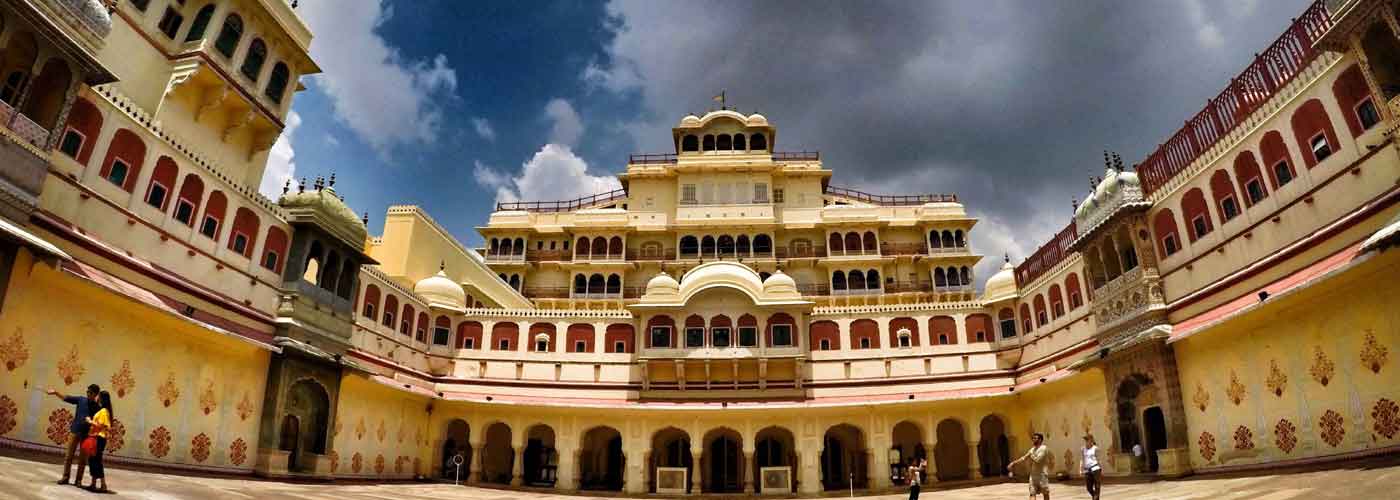
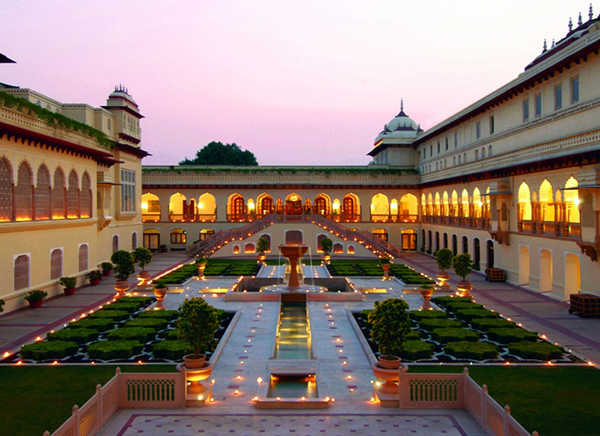
The City Palace was established at the same time as the city of Jaipur, by Maharaja Sawai Jai Singh II, who moved his court to Jaipur from Amber, in 1727. Jaipur is the present-day capital of the state of Rajasthan, and until 1949 the City Palace was the ceremonial and administrative seat of the Maharaja of Jaipur. The Palace was also the location of religious and cultural events, as well as a patron of arts, commerce, and industry. It now houses the Maharaja Sawai Man Singh II Museum, and continues to be the home of the Jaipur royal family. The palace complex has several buildings, various courtyards, galleries, restaurants and offices of the Museum Trust. The Maharaja Sawai Man Singh II Museum Trust looks after the Museum, royal cenotaphs (known as chhatris) and the fort of Jaigarh.
NAHARGARH FORT
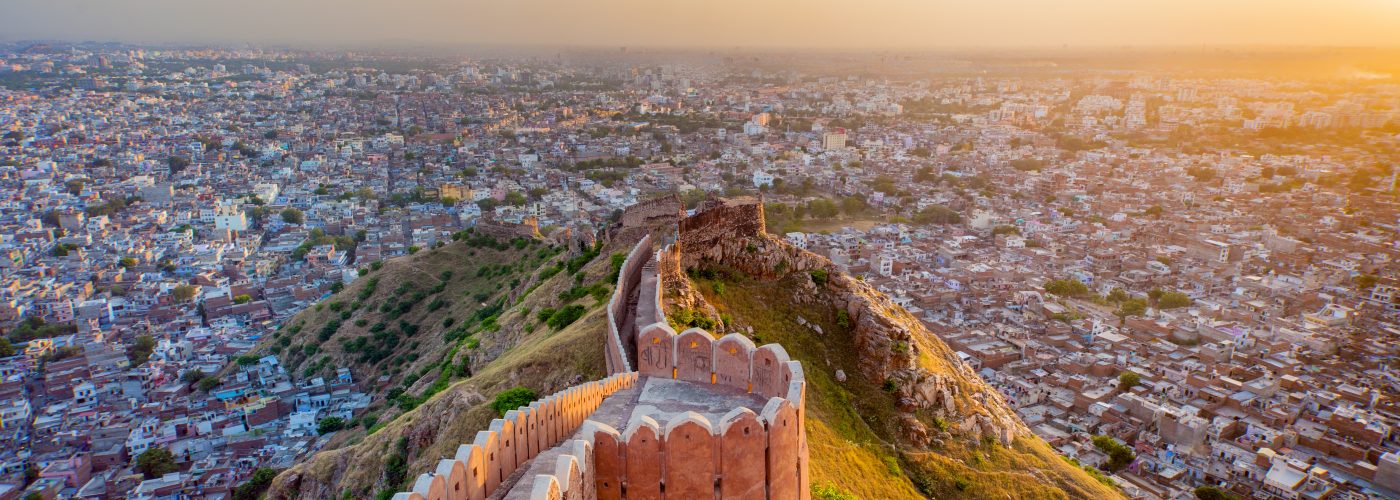
Nahargarh Fort stands on the edge of the Aravalli Hills, overlooking the city of Jaipur in the Indian state of Rajasthan. Along with Amer Fort and Jaigarh Fort, Nahargarh once formed a strong defense ring for the city. The fort was originally named Sudarshangarh but it became known as Nahargarh, which means ‘abode of tigers‘. The popular belief is that Nahar here stands for Nahar Singh Bhomia,whose spirit haunted the place and obstructed construction of the fort. Nahar’s spirit was pacified by building a temple in his memory within the fort, which thus became known by his name.Built mainly in 1734 by Maharaja Sawai Jai Singh, the king of Jaipur, the fort was constructed as a place of retreat on the summit of the ridge above the city. Walls extended over the surrounding hills, forming fortifications that connected this fort to Jaigarh, the fort above the old capital of Amber. Though the fort never came under attack during the course of its history, it did see some historical events, notably the treaties with the Maratha forces who warred with Jaipur in the 18th century. During the Indian Mutiny of 1857, the Europeans of the region, including the British Resident‘s wife, were moved to Nahargarh fort by the king of Jaipur, Sawai Ram Singh, for their protection.
AMER FORT
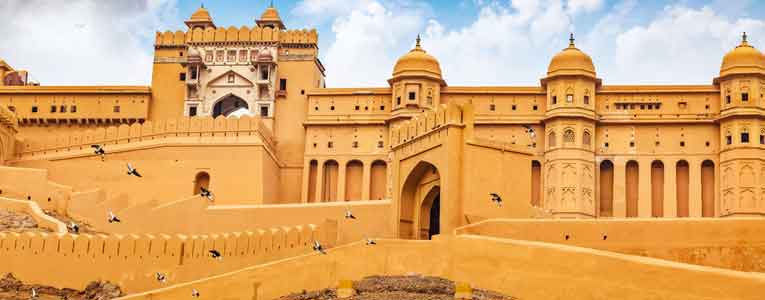
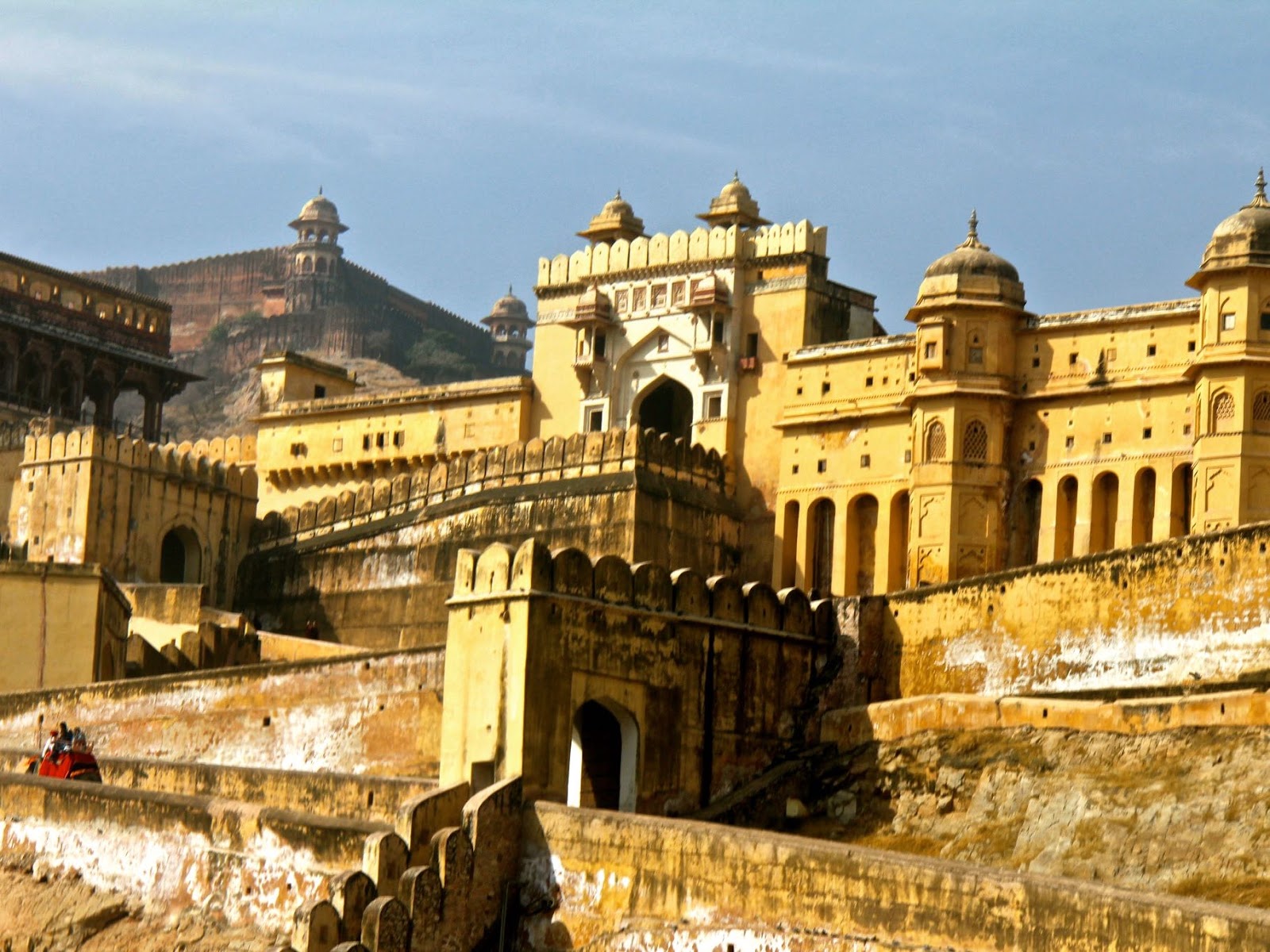
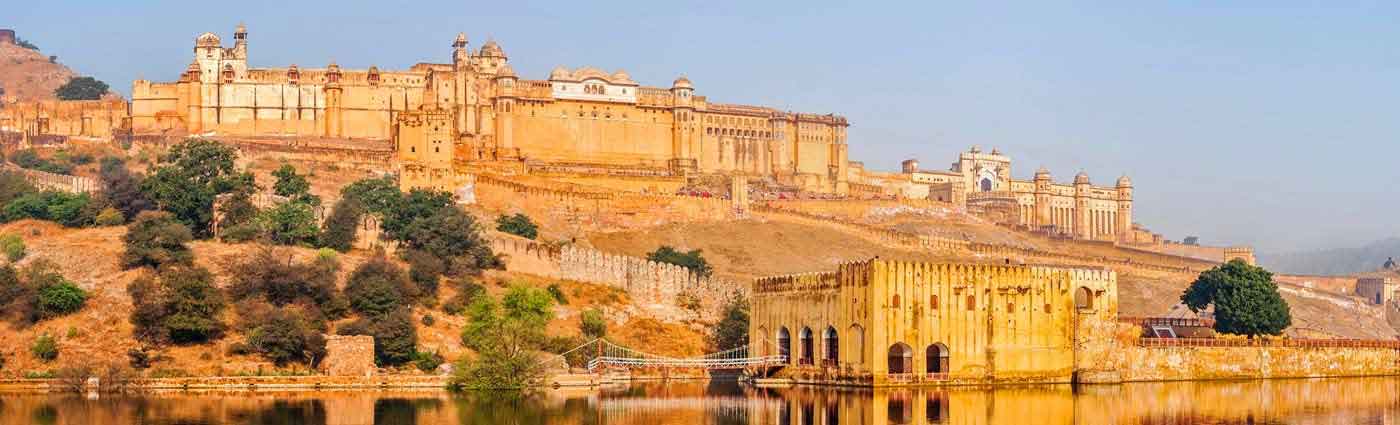
Amer, now a part of the Jaipur Municipal CorporatThe first structure was started by Raja KakilDev when Amer became his capital in 1036, on the site of present-day Jaigarh Fort. Around 1037 AD, Amer was conquered by the Kachwaha clan of Rajputs.Much of the present structure known as Amer Fort is actually the palace built by Raja Man Singh who ruled from 1590 to 1614 AD. The palace contains several spectacular buildings, such as the Diwan-i-Khas, and the elaborately painted Ganesh Pole built by the renowned warlord Mirza Raja Jai Singh I (Man Singh I’s grandson). The old and original fort of Amer, dating from earlier Rajas or the Meena period, is what is known in the present day as Jaigarh Fort, which was actually the main defensive structure rather than the palace itself. The two structures are interconnected by a series of encompassing fortifications.ion, was a city of the Rajasthan state, India.
The picturesque situation of Amer at the mouth of a rocky mountain gorge, in which nestles a lake, has attracted the admiration of travellers, including Victor Jacquemont and Reginald Heber. It is seen to be a remarkable example for its combined Rajput-Mughal architecture. The Amer Fort, a UNESCO World Heritage Site, is the top tourist attraction in the Jaipur area.

 Vartika Acharya